

Structural integrity of plastic pipes for water, gas, and oil
Plastic pipes play a key role in modern infrastructure and are essential for the distribution of water, gas, and oil. Their use has grown exponentially due to their corrosion resistance, ease of installation, and long service life. However, ensuring their safe and reliable performance requires a thorough understanding of the failure mechanisms that may affect them. Our research group develops experimental and computational methodologies to study the main structural integrity challenges in plastic pipelines, including slow crack growth (SCG), rapid crack propagation (RCP), buckling collapse of thermoplastic liners, and optimal installation parameters.
Characterization of Slow Crack Growth and Rapid Crack Propagation
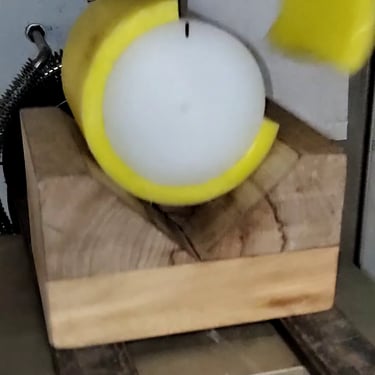
Plastic pipes and components for natural gas distribution have been used safely and successfully worldwide for several decades. Three key aspects are primarily considered when designing buried plastic gas pipelines for a 50-year service life: ductile fracture, Slow Crack Growth (SCG), and Rapid Crack Propagation (RCP). The current trend is to develop new material grades capable of lasting 100 years, which requires the implementation of appropriate evaluation methodologies.
Design methodologies to prevent failures associated with short-term internal pressure overloads are well-established and standardized. However, our research focuses on two primary failure mechanisms in polyethylene (PE) pipes: SCG and RCP, including the influence of surfactant solutions (Environmental Stress Cracking, ESC).
SCG is associated with long-term failure and exhibits quasi-brittle characteristics. This failure mechanism has historically caused the rupture of many PE pipes. Cracks initiate at stress concentration points such as voids, notches, or dust particles and grow subcritically under low-stress conditions typically present during service.
RCP failures, while rare, pose a catastrophic risk. This mechanism is triggered by an intense and sudden impact on the pressurized pipe. Potential sources include excavator strikes, pressure pulses, handling errors, and more. If the operating conditions and material properties are inadequate, RCP can result in crack propagation speeds reaching up to 300 m/s.
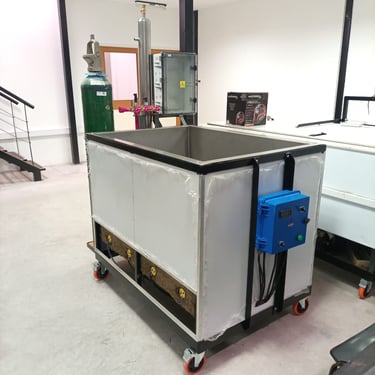
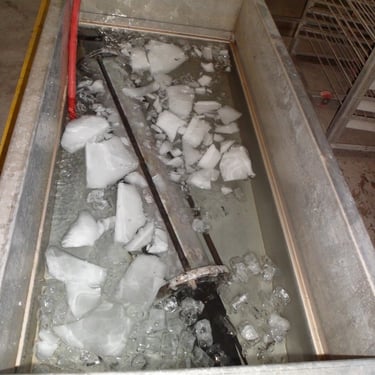
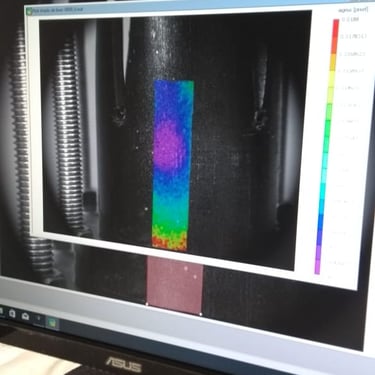
Traditional methods for characterizing plastic pipe performance concerning these failure modes involve high costs and long testing times. Currently, two of our main research lines focus on developing simplified methodologies to characterize plastic pipes based on their resistance to SCG and RCP.
Buckling Collapse of Thermoplastic Liners
The use of thermoplastic liners is a widely adopted technique for corrosion protection in aggressive chemical environments and for rehabilitating damaged pipelines. This technology was introduced over 30 years ago for water, gas, and oil transport and has since evolved with advancements in materials, designs, and installation methods.
Thermoplastic liners can be significantly affected by exposure to hydrocarbons in service. Gaseous components present in oil (such as CH₄ or CO₂) tend to permeate through the polyethylene wall relatively quickly. This results in an equilibrium between the internal pressure of the liner and the annular space defined by the inner wall of the host metal pipe and the outer surface of the liner. These radial stresses can lead to buckling collapse, a common failure mode in polymeric liners.
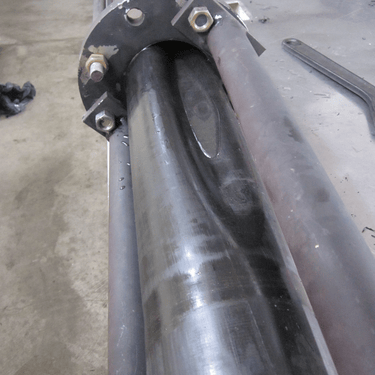
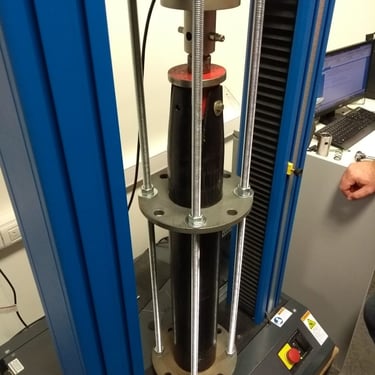
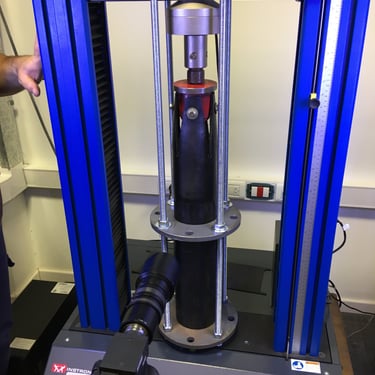
Our research group has developed in-house experimental methods and equipment—originating from a doctoral thesis—to characterize and prevent this type of failure. The equipment replicates buckling collapse under laboratory conditions and works in conjunction with advanced numerical and constitutive modeling.
Admissible Installation Length of Liners
Among the most common pipeline rehabilitation and protection methods using thermoplastic liners, two main categories can be distinguished: sliplining and close-fit lining.
Sliplining involves inserting a liner section with an outer diameter smaller than the inner diameter of the host pipe. This technique is advantageous due to its simplicity, low cost, and short execution time. Once excavation reaches the metal pipe, liner insertion can be performed via pushing or pulling techniques.
Close-fit lining includes several techniques where the liner achieves a tight fit against the host pipe after installation.
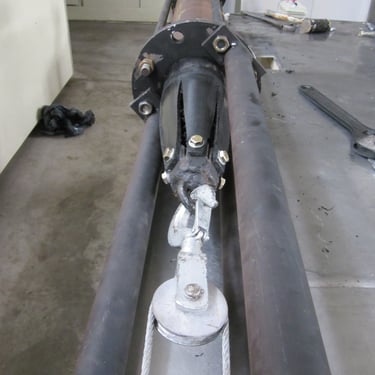
A key research focus in this area is determining the maximum allowable installation length and optimal installation parameters to prevent liner deterioration. Our group develops experimental laboratory-scale measurement methods to obtain data on insertion force, speed, and depth. Additionally, we employ finite element simulations coupled with complex viscoplastic constitutive models to complement our experimental findings.